
Proposition 58 California: Parent-to-Child Property Transfers Explained

For decades, Proposition 58 played a major role in how families passed down real estate in California.
It allowed parents to transfer property to their children without triggering a property tax reassessment — preserving low tax bases and making it easier to hold property across generations.
But those rules have changed.
While Proposition 58 still matters, especially for older transfers, it no longer applies the way many property owners think it does today.
David R. Collins, Certified General Appraiser and principal of Collins & Associates, has spent decades evaluating property transfers, tax exposure, and valuation scenarios across California. His experience is critical when analyzing how historical rules like Proposition 58 still impact properties today.
What Was Proposition 58?
Proposition 58 was passed in 1986 and created an exclusion from property tax reassessment for transfers between parents and children.
- A primary residence could transfer with no reassessment limit
- Up to $1 million in assessed value of other property could transfer without reassessment
- The original base year value could be preserved
This allowed properties to transfer without resetting to current market value — a major financial advantage.
Why Proposition 58 Was So Valuable
The benefit came from the gap between assessed value and market value.
For example:
- Property purchased for $200,000
- Current market value: $1.5 million
Under Proposition 58, the child could inherit the lower tax base instead of being taxed at today’s value.
This difference often meant thousands of dollars saved annually in property taxes.
How Parent-to-Child Transfers Worked
To qualify:
- The transfer had to be between a parent and a child
- A claim form had to be filed with the county
- The transfer needed to meet legal eligibility requirements
This applied to:
- Inherited property
- Transfers through a living trust or revocable trust
- Direct ownership transfers
However, ownership structure and timing could affect eligibility.
What Changed With Proposition 19
In 2021, Proposition 19 significantly changed the rules.
- Most parent-to-child transfers now trigger reassessment
- The exclusion is largely limited to primary residences
- A value cap applies
- Rental and investment properties are typically reassessed
Learn more in our full breakdown of Proposition 19 in California.
When Proposition 58 Still Applies Today
Proposition 58 may still apply in specific situations:
- Transfers completed before February 16, 2021
- Properties already benefiting from a protected tax base
- Trust structures established under prior law
If a property qualifies, preserving that advantage is critical.
How Proposition 58 Connects to Proposition 13
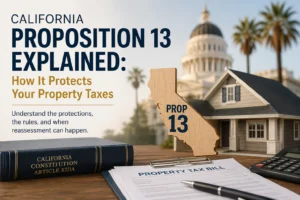
Proposition 58 worked in combination with Proposition 13, which established the base-year value system for property taxes in California.
Understanding that foundation is essential. Read our guide on Proposition 13 in California.
Planning Around Property Tax Reassessment
Today, planning determines tax outcomes.
Property owners should evaluate:
- Timing of transfer
- Primary residence qualification
- Ownership structure (individual vs trust)
- Gap between assessed and market value
- Long-term tax exposure
For deeper strategies, see How to Avoid Property Tax Reassessment in California.
Common Mistakes Property Owners Make
- Assuming Proposition 58 still broadly applies
- Not reviewing ownership structure
- Failing to file required forms
- Underestimating reassessment impact
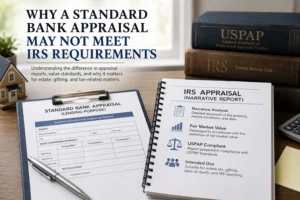
- Skipping a professional appraisal
Why Appraisals Matter in Property Transfers
At the center of every transfer is one key factor: value.
A professional appraisal helps:
- Establish fair market value
- Support estate and trust planning
- Evaluate reassessment exposure
- Provide documentation for tax or legal matters
Related services:
Final Thoughts
Proposition 58 shaped how property was passed down in California for decades.
Even though its protections have been limited, its impact is still felt today — especially for properties that continue to benefit from a protected tax base.
Understanding how it worked, how it connects to Proposition 19, and how valuation plays a role is essential for making informed decisions.
Work With a California Appraiser Who Understands Property Tax Law
If you’re evaluating a property transfer, reviewing reassessment exposure, or planning ahead, Collins & Associates can help.
Led by David R. Collins, a Certified General Appraiser with decades of experience, our firm provides independent, defensible appraisals used by attorneys, CPAs, and property owners across California.
Request a consultation or speak directly with our office to understand your options.





Need an Appraisal?
Contact Dave for reliable, certified appraisals across California.