
Understanding Multi-Family Residential Appraisals in California
The term “multi-family residential appraisal” is commonly used online to describe properties with multiple residential units. In professional appraisal practice, however, different property types often require entirely different valuation methodologies depending on unit count, ownership structure, zoning, income characteristics, and intended use of the appraisal.
At Collins & Associates, appraisal assignments are categorized based on the actual property type and valuation complexity rather than broad consumer terminology. This page serves as an educational resource to help property owners, attorneys, trustees, CPAs, investors, and lenders better understand the different categories of attached residential and income-producing residential properties.
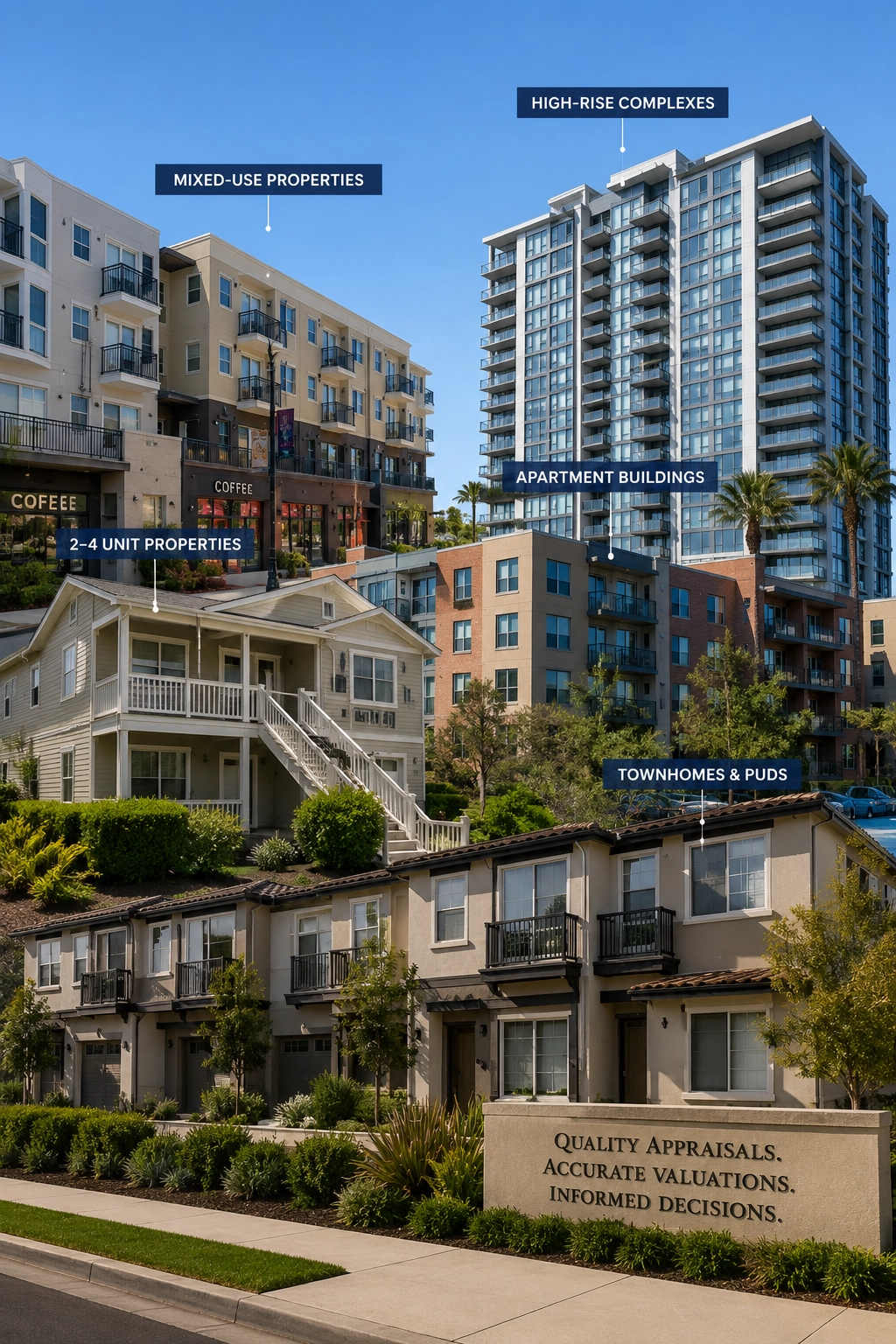
Property types commonly associated with multi-family residential appraisals may include:
- Duplexes, triplexes, and fourplexes
- Apartment buildings and larger income properties
- Townhomes and planned unit developments (PUDs)
- High-rise residential complexes
- Mixed-use residential and commercial properties
Each property category involves different market behavior, ownership considerations, valuation approaches, and regulatory factors that can influence how an appraisal is developed and reported.
Why Property Classification Matters in Real Estate Appraisals
Not all multi-family residential properties are analyzed the same way. Unit count, ownership structure, zoning, income potential, and market behavior can significantly influence how an appraisal is developed and reported.
For example, a duplex or fourplex may be analyzed differently than a larger apartment building because the buyer pool, financing considerations, and valuation methods often differ. Similarly, condominium ownership structures and planned unit developments (PUDs) involve different legal and ownership characteristics that can affect market comparisons and overall valuation analysis.
Mixed-use properties may require both residential and commercial analysis, while high-rise residential complexes can introduce additional considerations involving market segmentation, homeowners associations (HOAs), amenities, and investor activity.
Understanding the correct property classification helps ensure the appraisal methodology reflects the actual market behavior of the property being analyzed rather than relying on generalized valuation assumptions.
Multi-Family & Attached Residential Property Types
Different types of residential income and attached housing properties can require substantially different valuation approaches. The following property categories represent some of the most common appraisal assignments associated with multi-family residential and related residential property analysis throughout Southern California.
Whether the assignment involves estate planning, IRS reporting, litigation support, investment analysis, property tax appeals, or ownership transitions, understanding the specific property category is an important part of developing a credible and well-supported appraisal.
Small Income Unit Appraisals (2–4 Units)
Duplexes, triplexes, and fourplexes fall into a unique category where residential and income considerations overlap. The valuation of these type of properties is based income and multiplier.
Apartment Building Appraisals (5+ Units)
Larger residential properties require a commercial-level valuation approach. These appraisals typically involve income capitalization, expense analysis, and detailed market comparisons to determine accurate property value.
Mixed-Use Commercial & Residential Appraisals
High-value residential properties require a deeper level of analysis, discretion, and market expertise. Properties with unique characteristics, i.e. tennis course, guest homes, views or with limited comparable data i.e. intrinsic value, horse properties, large estate homes and acreage.
Townhome & PUD Appraisals
These are generic architecture terms of an attach row of units. The type of ownership is either a condominium or plan unit development (PUD). A condominium ownership is consist of the airspace within the unit plus a percentage of the common area. The ownership of a PUD consist of the building and the land plus a percentage of the common area. Both types of properties have home owner associations (HOA).
High-Rise Complex Appraisals
High-rise complexes are a multi-story buildings consisting of condominium units. Ownership of each unit consist of the airspace within the unit plus a percentage of the common area. These types of properties have home owner associations (HOA).
How Valuation Methods Differ by Property Type
Real estate appraisals are not developed using a single formula or standardized approach for every property. The valuation methodology often changes depending on the property type, ownership structure, income characteristics, market participants, and intended use of the appraisal.
For smaller residential income properties such as duplexes, triplexes, and fourplexes, appraisers may analyze both residential comparable sales and income-related market data because these properties often attract a combination of owner-occupants and investors.
Larger apartment buildings are typically analyzed as commercial income-producing assets, where factors such as capitalization rates, operating expenses, occupancy levels, rental income stability, and investor expectations may play a more significant role in determining value.
Townhomes, condominiums, and planned unit developments (PUDs) can require analysis of ownership rights, homeowners association (HOA) considerations, common area influences, and comparable sales within similar residential developments.
Mixed-use properties may involve both residential and commercial valuation analysis, while high-rise residential complexes can introduce additional market segmentation and amenity-related considerations depending on the property type and target market.
The objective of the appraisal process is to apply valuation methodologies that appropriately reflect how the market views and analyzes the specific property being appraised.
Work Directly With David R. Collins
Multi-family residential appraisal assignments can involve far more than a basic estimate of value. Depending on the property type and intended use of the appraisal, assignments may require income analysis, investor-focused market research, retrospective valuation, legal support, or IRS-related reporting.
At Collins & Associates, all appraisal assignments are personally completed by David R. Collins, Certified General Appraiser with over 50 years of experience analyzing residential, income-producing, and complex real estate properties throughout Southern California.

Meet Your Multi-Family Property Appraiser
David R. Collins, G.A.A., S.C.R.E.A.
Certified General Appraiser
David R. Collins is a Certified General Appraiser with decades of experience valuing residential and income-producing properties throughout Southern California. His background includes multi-family, commercial, and complex valuation assignments, allowing him to approach residential income properties with a deeper analytical perspective.
Multi-family properties require more than a surface-level review. They involve rental income analysis, market positioning, and investor-driven valuation considerations. This experience allows him to evaluate both the physical characteristics of a property and its financial performance within the market.
Many assignments involve legal, tax, or fiduciary considerations where the appraisal must withstand scrutiny from attorneys, accountants, courts, or government agencies. In these cases, experience is not optional. It directly affects how the valuation is developed, supported, and communicated.
Trusted for Assignments That Require More Than a Basic Valuation
Many multi-family and attached residential appraisal assignments involve financial, legal, tax, or investment-related considerations that require a deeper level of analysis and reporting.
Assignments may include:
- Estate and trust valuations
- IRS reporting and gifting appraisals
- Divorce and partnership-related valuation matters
- Retrospective or historical valuations
- Income-producing residential property analysis
- Property tax appeal support
- Litigation-related appraisal assignments
Each appraisal is developed with careful market research, valuation analysis, and reporting that aligns with the intended use of the assignment.
Experience Supporting Defensible Valuation Analysis
Properties involving multiple residential units, attached housing, or income-producing characteristics often require a more detailed level of market analysis than standard residential appraisal assignments.
An appraisal prepared for these purposes must not only be technically supported, but also clearly communicated and understandable to the parties relying on the report, including attorneys, accountants, trustees, investors, lenders, and government agencies.
With decades of experience analyzing complex residential and income-producing properties throughout Southern California, Collins & Associates provides appraisal reporting designed to support clarity, credibility, and defensible valuation conclusions.
Request A Multi-Family Residential Appraisal Consultation
Multi-family residential appraisal assignments can vary significantly depending on the property type, ownership structure, intended use of the appraisal, and reporting requirements involved. Whether the assignment relates to estate planning, IRS reporting, investment analysis, legal matters, or income-producing residential property valuation, Collins & Associates provides appraisal services developed with careful market analysis and professional reporting standards.
All appraisal assignments are personally completed by David R. Collins, Certified General Appraiser serving clients throughout Southern California.

Frequently Asked Questions
Schedule a Call Back with Dave Collins
Provide your contact information and Dave Collins will personally return your call to discuss your appraisal needs and timeline.
"*" indicates required fields