
How to Avoid Property Tax Reassessment in California (Complete Guide)

Navigating property tax reassessment in California is no longer straightforward. While Proposition 13 once provided predictable protections, the introduction of Proposition 19 has significantly changed how reassessment works, especially for inherited properties and family transfers.
For many property owners, the difference between maintaining a low assessed value and triggering reassessment can mean thousands of dollars per year in additional taxes. In practice, reassessment issues often arise not from obvious sales, but from poorly structured transfers, trust arrangements, or ownership changes that unintentionally trigger reassessment.
This guide explains how property tax reassessment works in California, what triggers it, and the strategies property owners use to avoid unnecessary increases, especially under current Proposition 19 rules.
What Is Property Tax Reassessment in California?
Property tax reassessment occurs when a property’s assessed value is reset to its current market value. Since California property taxes are based on assessed value, this can result in a significant increase in annual tax liability.
Under Proposition 13, assessed value increases are limited to 2% per year unless a change in ownership or new construction occurs. This creates a large gap between market value and taxable value over time, which is one of the main financial advantages property owners aim to preserve.
What Triggers Property Tax Reassessment?
Reassessment is typically triggered by a change in ownership or significant property improvements. However, many reassessments occur due to misunderstood or improperly structured transactions.
- Sale or transfer of property
- Adding or removing individuals from title
- Inheritance or gifting of property
- Transfers involving trusts or LLCs
- New construction or major renovations
In real-world appraisal scenarios, one of the most common triggers is adding a child to title without understanding how beneficial ownership is interpreted. These situations frequently result in unintended reassessment.
How to Avoid Property Tax Reassessment in California
Avoiding reassessment requires careful planning before ownership changes occur. Once a triggering event happens, options become limited.
Key strategies include:
- Maintaining ownership structure where possible
- Structuring transfers through properly designed trusts
- Understanding parent-child exclusion limitations under Proposition 19
- Avoiding partial ownership transfers that exceed reassessment thresholds
In complex situations, property owners often require valuation support to establish defensible positions for tax planning or reporting purposes. This is especially relevant in estate transfers and disputes involving assessed value.
How Proposition 13 Protects Property Owners
Proposition 13 limits property taxes by capping assessed value increases and establishing a base year value at the time of purchase.
This protection allows long-term property owners to maintain significantly lower tax liabilities compared to current market values.
How Proposition 19 Changed the Rules
Proposition 19 significantly narrowed the ability to transfer property without reassessment, particularly for inherited properties.
- Primary residence requirement for exclusions
- $1 million value limitation
- Restrictions on rental and investment properties
As a result, many inherited properties that previously retained their assessed value are now reassessed at market value, leading to substantial increases in property taxes.
What Happened to Proposition 58?
Before Proposition 19, Proposition 58 allowed many parent-to-child property transfers to occur without triggering property tax reassessment. For years, property owners relied on these rules to preserve low assessed values across generations.
That changed when Proposition 19 took effect. While many people still search for Proposition 58 or assume the same rules still apply, the broader parent-child transfer exclusions under Proposition 58 no longer govern most current transfers.
Today, exclusions are far more limited and generally depend on factors such as whether the property becomes the child’s primary residence and whether the property value exceeds current thresholds. This is why older planning strategies based on Proposition 58 should not be assumed to work under current law.
For families reviewing inherited property, trust planning, or ownership transfers, understanding the difference between former Proposition 58 rules and current Proposition 19 rules is essential to avoiding costly surprises.
Property Tax Reassessment and Inherited Property
Inheritance is one of the most misunderstood areas of property tax reassessment.
While inheritance provides a step-up in basis for capital gains purposes, it often triggers reassessment unless specific exclusions apply.
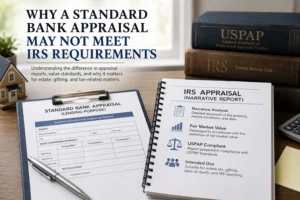
In estate-related scenarios, determining the correct market value at the time of transfer is critical. This is typically established through a date of death appraisal, which is used for IRS reporting and valuation support.
When You Need a Property Appraisal
In many reassessment and estate scenarios, a professional appraisal becomes essential.
- Establishing fair market value for inheritance
- Supporting IRS filings and estate planning
- Challenging assessed values through appeals
For example, property owners involved in reassessment disputes may require a property tax assessment appeal appraisal to support their case.
In legal or complex valuation scenarios, including disputes or litigation, an expert witness real estate appraiser may also be required to provide defensible analysis.
Real-World Scenarios That Trigger Reassessment
In practice, reassessment is often triggered unintentionally. Common examples include:
- Adding children to title without planning
- Transferring ownership into improperly structured trusts
- LLC ownership changes exceeding 50%
- Inheritance of non-primary residences under Proposition 19
These scenarios frequently require retrospective valuation and advisory support to address tax consequences after the fact.
Final Thoughts
Property tax reassessment in California is no longer just a matter of ownership transfer. It is a complex intersection of tax law, valuation, and strategic planning.
For property owners, heirs, and investors, understanding these rules before making decisions is critical to avoiding unnecessary tax increases.
Collins & Associates provides real estate appraisal services for estate planning, IRS reporting, and property tax-related matters throughout Southern California. These assignments require defensible valuation, accurate reporting, and a clear understanding of how property tax rules apply in real-world scenarios.
Request an appraisal consultation if you need support with valuation, estate planning, or property tax-related issues.







Need an Appraisal?
Contact Dave for reliable, certified appraisals across California.