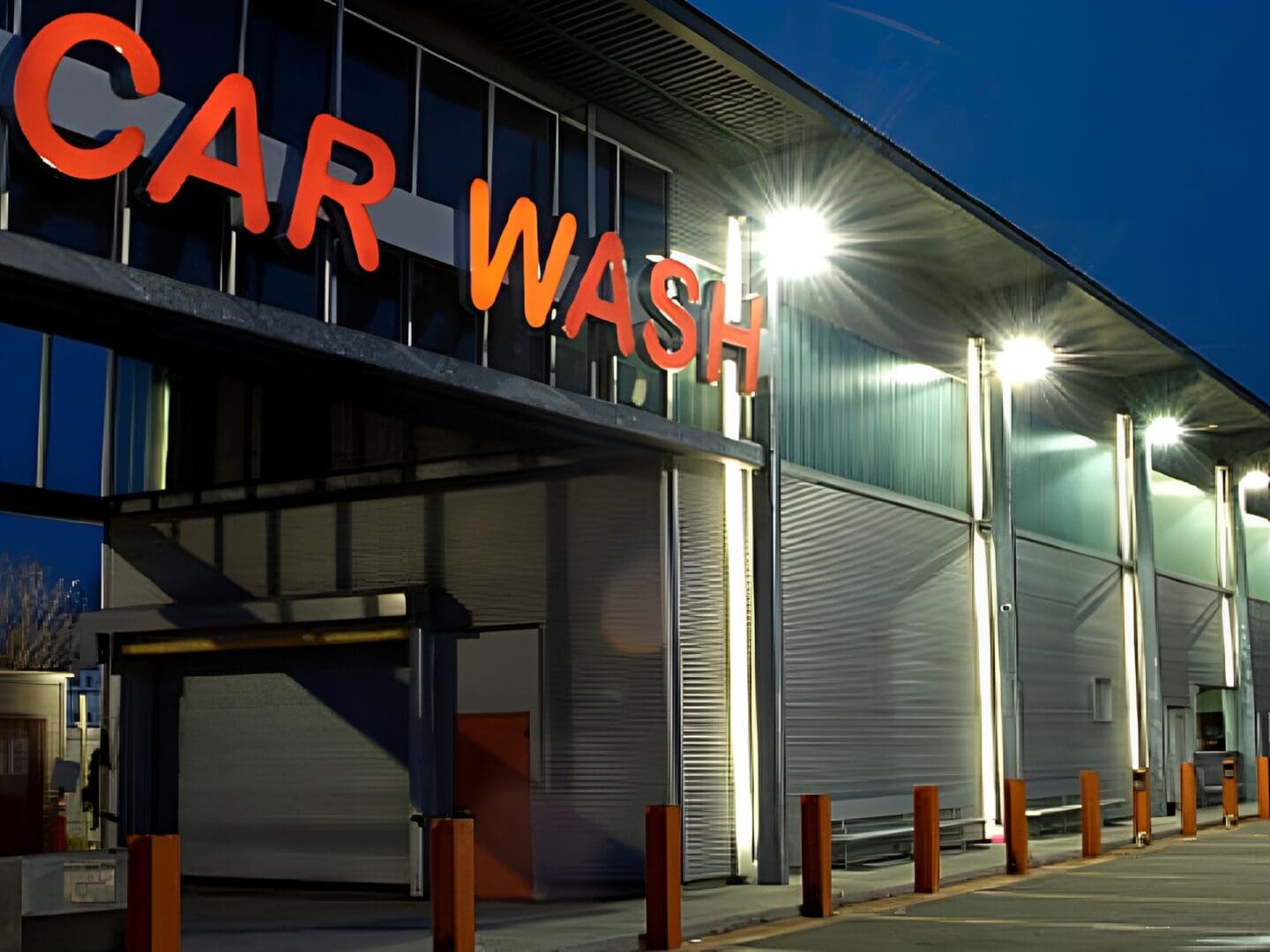
Automatic car washes consist of tunnel-like buildings into which cars are driven through. The car is put into a line-up called the stack or queue. The stack moves sequentially, so the wash knows what each car purchased. The tire sensor lets the car wash know where the wheels are and how far apart they are. The rollers come up behind the tires, pushing the car through a detector. The equipment arches vary in number and type. A good car wash makes use of many pieces of equipment and stages of chemical application to thoroughly clean the vehicle.
The car wash will typically start cleaning with pre-soaks applied through special arches. The vehicle next encounters tire and wheel nozzles, which the industry calls CTAs (Chemical Tire Applicators). These will apply specialized formulations, which remove brake dust and build-up from the surface of the wheels and tires. The next arch will often be wraparounds, usually made of a soft cloth, or closed-cell foam material. These wraparounds rub the front bumper and, after washing the sides, will follow across the rear of the vehicle, cleaning the rear. Past the first wraps or entrance wraps may be a tire brush that will scrub the tires and wheels. There may also be rocker panel washers which are shorter and clean the lower parts of the vehicle. Most rocker brushes house the motor below the brush hub, so they don't inhibit cloth movement and allow the brush to be mounted under a support frame. The car may then pass through a second set of wraparounds. This may also be where high-pressure water streams are used to clean difficult-to-reach parts of the vehicle. Next, the vehicle is treated with a final rinse. Many car washes utilize a "spot-free" rinse of soft water, that has been filtered of the salts normally present, and sent through semi-permeable membranes to produce highly purified water that will not leave spots. After using spot-free free water, the vehicle is finished with forced air drying, in some cases utilizing heat to produce a very dry car.