
Commercial & Industrial Land Appraisals for Development, Investment & Ownership Decisions
Commercial and industrial land value depends on far more than acreage or price per square foot. Zoning regulations, permitted uses, access, utilities, infrastructure, parcel configuration, entitlements, development potential, surrounding land uses, and current market demand can significantly influence fair market value.
Collins & Associates provides independent commercial and industrial land appraisal services throughout Southern California for property owners, developers, investors, lenders, attorneys, accountants, corporations, estate professionals, and government agencies. Every appraisal is personally completed by David R. Collins, Certified General Appraiser, with more than 50 years of real estate valuation experience.
Assignments may involve retail and office development sites, industrial land, warehouse and distribution sites, manufacturing land, logistics development sites, mixed-use parcels, entitled and unentitled land, infill properties, redevelopment sites, land assemblages, and larger development parcels. Each appraisal considers the property's physical characteristics, zoning, legally permissible uses, development rights, entitlement status, highest and best use, comparable land sales, and current market conditions.
What Is a Commercial & Industrial Land Appraisal?
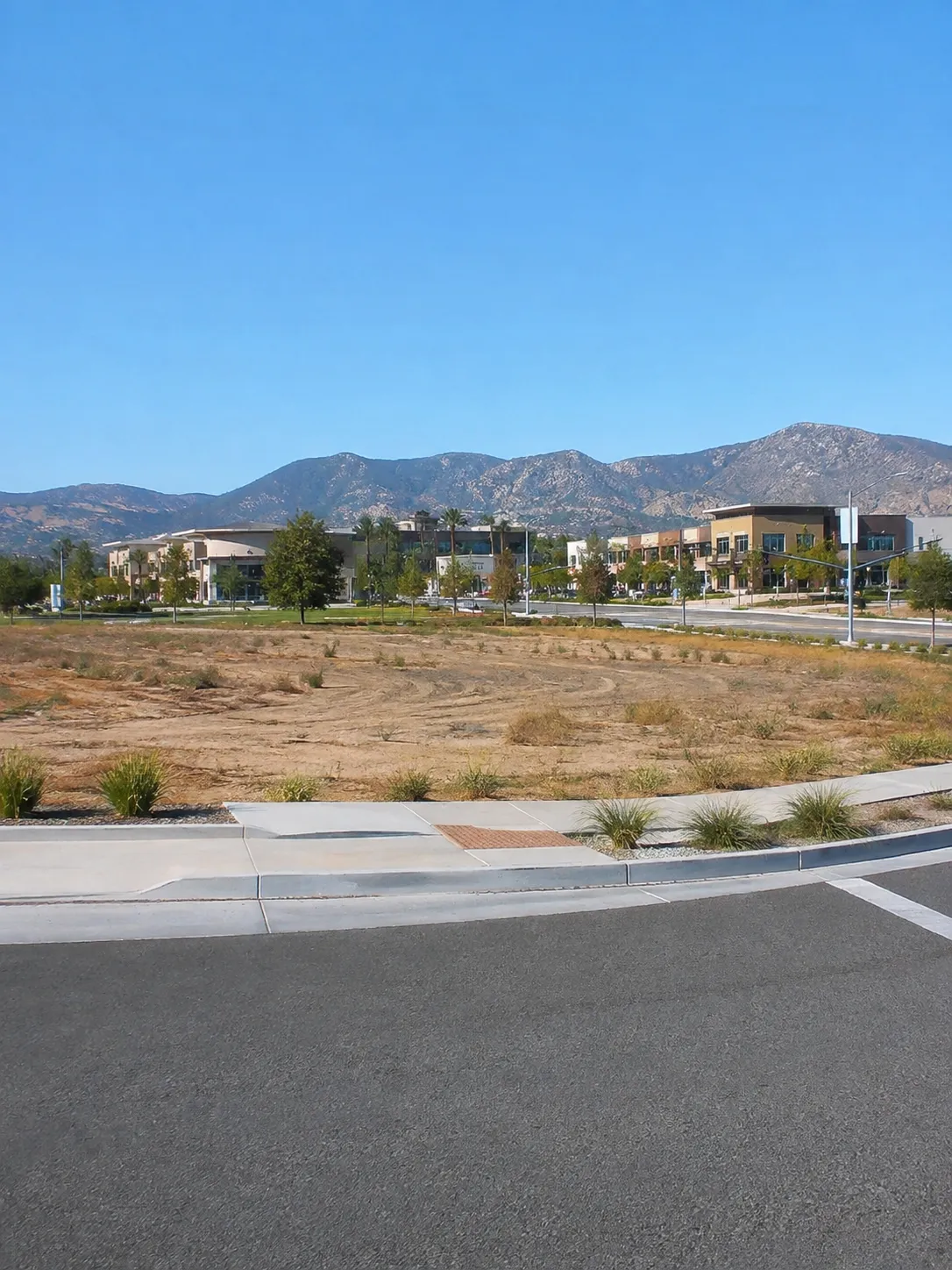
A commercial and industrial land appraisal is an independent property valuation of land intended or potentially suitable for business, retail, office, industrial, warehouse, distribution, manufacturing, logistics, mixed-use, or other income-producing development.
Unlike the appraisal of an improved commercial or industrial property, land valuation focuses primarily on the site itself and the factors that determine how it can be used legally, physically, and economically. Two parcels of similar acreage can have substantially different market values because of zoning, development intensity, infrastructure, freeway access, utility capacity, frontage, topography, utilities, environmental conditions, or entitlement status.
The appraisal process includes analysis of the parcel of land, applicable zoning regulations, permitted uses, development rights, access, utilities, infrastructure, physical characteristics, easements, development restrictions, entitlements, surrounding real estate, and relevant comparable sales. Current land sales, market data, market trends, and development activity are also considered to assess how buyers and developers evaluate competing properties.
Highest and best use is particularly important in commercial and industrial land valuation. The appraiser evaluates uses that are legally permissible, physically possible, financially feasible, and maximally productive to determine the use that appropriately supports the property's valuation.
What the Appraiser Evaluates
- Vacant commercial land
- Vacant industrial land
- Retail development sites
- Office development sites
- Warehouse development land
- Distribution and logistics sites
- Manufacturing land
- Flex and business park development sites
- Commercial development parcels
- Industrial development sites
- Mixed-use development land
- Multifamily development sites, when applicable
- Entitled development land
- Unentitled commercial and industrial land
- Infill development parcels
- Redevelopment sites
- Land assemblages
- Owner-user development sites
- Investment land held for future development
Each commercial or industrial parcel presents different valuation considerations. Location, zoning, permitted uses, development intensity, parcel configuration, access, infrastructure, utility capacity, entitlement status, physical conditions, comparable sales, market demand, and highest and best use are analyzed together to develop a credible and well-supported opinion of market value.
Types of Commercial & Industrial Land We Appraise
Commercial and industrial land varies significantly in permitted use, development potential, zoning, infrastructure requirements, entitlement status, and market demand. Collins & Associates provides appraisal services for a broad range of development and investment land throughout Southern California.
Commercial Development Land
Commercial development land may support retail, office, hospitality, service businesses, mixed-use projects, or other income-producing commercial development. Property value depends on what can reasonably be developed on the site and the demand for that use within the surrounding real estate market.
- Commercial zoning and permitted uses
- Parcel size and configuration
- Development intensity
- Street frontage and visibility
- Access and circulation
- Utilities and infrastructure
- Entitlement status
- Comparable commercial land sales
Industrial Development Land
Industrial land may support warehouses, distribution centers, manufacturing facilities, logistics operations, flex buildings, research and development facilities, or other industrial uses. Industrial land valuation requires careful consideration of the characteristics that affect the site's operational and development utility.
Warehouse & Distribution Development Sites
Land intended for warehouse or distribution development is influenced by access to freeways, ports, airports, freight corridors, population centers, and regional distribution networks. Site configuration and transportation access can be particularly important to logistics-oriented users and developers.
Manufacturing & Heavy Industrial Land
Manufacturing and heavier industrial uses may require characteristics not necessary for conventional commercial development, including higher-capacity utilities, specialized zoning, adequate buffers, truck circulation, and proximity to transportation infrastructure.
Retail & Office Development Sites
Commercial land intended for retail or office development requires analysis of factors such as visibility, accessibility, surrounding demographics, employment patterns, traffic exposure, and competing development.
Flex, Business Park & R&D Land
Land intended for flex, business park, research and development, or similar uses may combine characteristics of office and industrial real estate. These sites require analysis of zoning flexibility, development standards, infrastructure, accessibility, and demand from prospective users.
Entitled Commercial & Industrial Land
Entitled land has received some or all governmental approvals necessary for a proposed commercial or industrial project. Existing entitlements may influence market value by reducing approval uncertainty and advancing the property toward development.
Infill & Redevelopment Sites
Commercial and industrial infill sites are located within established, developed areas and may benefit from existing infrastructure and proximity to employment, transportation, customers, or established business districts. Redevelopment sites may contain older improvements that no longer represent the property's highest and best use.
Commercial & Industrial Land Assemblages
Land assemblages involve adjoining parcels that may provide greater development utility when combined. The appraisal considers the individual parcels, the proposed or potential assemblage, and market evidence relevant to the larger development opportunity.
Commercial & Industrial Land Characteristics That Influence Valuation
Commercial and industrial land can differ substantially in zoning, development potential, infrastructure, access, entitlement status, and physical characteristics. An appraisal evaluates how these factors influence marketability, development feasibility, highest and best use, and overall market value within the Southern California commercial and industrial real estate market.
Location and Market Demand
Location can significantly influence commercial and industrial land value. Proximity to freeways, transportation corridors, ports, airports, population centers, employment areas, established business districts, and industrial hubs may affect development demand and property value. The appraisal considers the immediate surroundings together with broader commercial and industrial market trends.
Parcel Size, Shape, and Configuration
Parcel dimensions and configuration influence how efficiently commercial or industrial land can be developed. Irregular shapes, limited frontage, easements, narrow dimensions, or other physical constraints may reduce usable development area, while larger, efficiently configured sites may accommodate a broader range of commercial or industrial improvements.
Utilities and Infrastructure
Availability and capacity of water, sewer, electricity, natural gas, telecommunications, drainage, and other infrastructure can directly influence development feasibility. Industrial development may require substantial utility capacity, making infrastructure particularly important for manufacturing, warehouse, logistics, and other intensive uses.
Entitlements and Development Approvals
Existing entitlements, approved plans, permits, development agreements, and governmental approvals may influence market value by reducing uncertainty and shortening the development process. The appraisal considers the status and relevance of approvals together with current demand for the proposed commercial or industrial use.
Surrounding Commercial & Industrial Development
Existing and planned development surrounding a property can influence its marketability and highest and best use. Established industrial districts, business parks, retail corridors, logistics hubs, and other complementary uses may support demand, while incompatible neighboring uses may limit certain development opportunities.
Zoning and Permitted Uses
Zoning regulations determine which commercial or industrial uses may legally be developed on a property. The appraisal considers permitted and conditional uses, development intensity, floor area ratios, setbacks, height limitations, parking requirements, and other regulations that affect development potential.
Access, Frontage, and Transportation
Access requirements vary considerably between commercial and industrial properties. Retail-oriented land may benefit from visibility and convenient customer access, while warehouse, distribution, manufacturing, and logistics sites may place greater importance on freeway proximity, designated truck routes, loading access, and efficient circulation.
Topography and Site Conditions
Slope, elevation, drainage, soil conditions, grading requirements, flood zones, environmental conditions, and other physical characteristics may affect usable land area and development costs. The impact of these characteristics depends on the property's proposed or highest and best use.
Easements and Development Restrictions
Access easements, utility easements, reciprocal agreements, deed restrictions, environmental constraints, and other encumbrances may affect how a parcel can be developed. Their impact depends on their location, terms, and practical effect on the property's development rights and utility.
Highest and Best Use
Highest and best use is fundamental to commercial and industrial land valuation. The appraiser analyzes uses that are legally permissible, physically possible, financially feasible, and maximally productive to determine the use that appropriately supports the property's market value.
When Is a Commercial & Industrial Land Appraisal Needed?
Commercial and industrial land appraisals support important acquisition, development, financing, legal, tax, estate, and investment decisions. The intended use of the appraisal determines the effective valuation date, scope of work, market research required, and the appropriate appraisal report.
How Commercial & Industrial Land Is Appraised
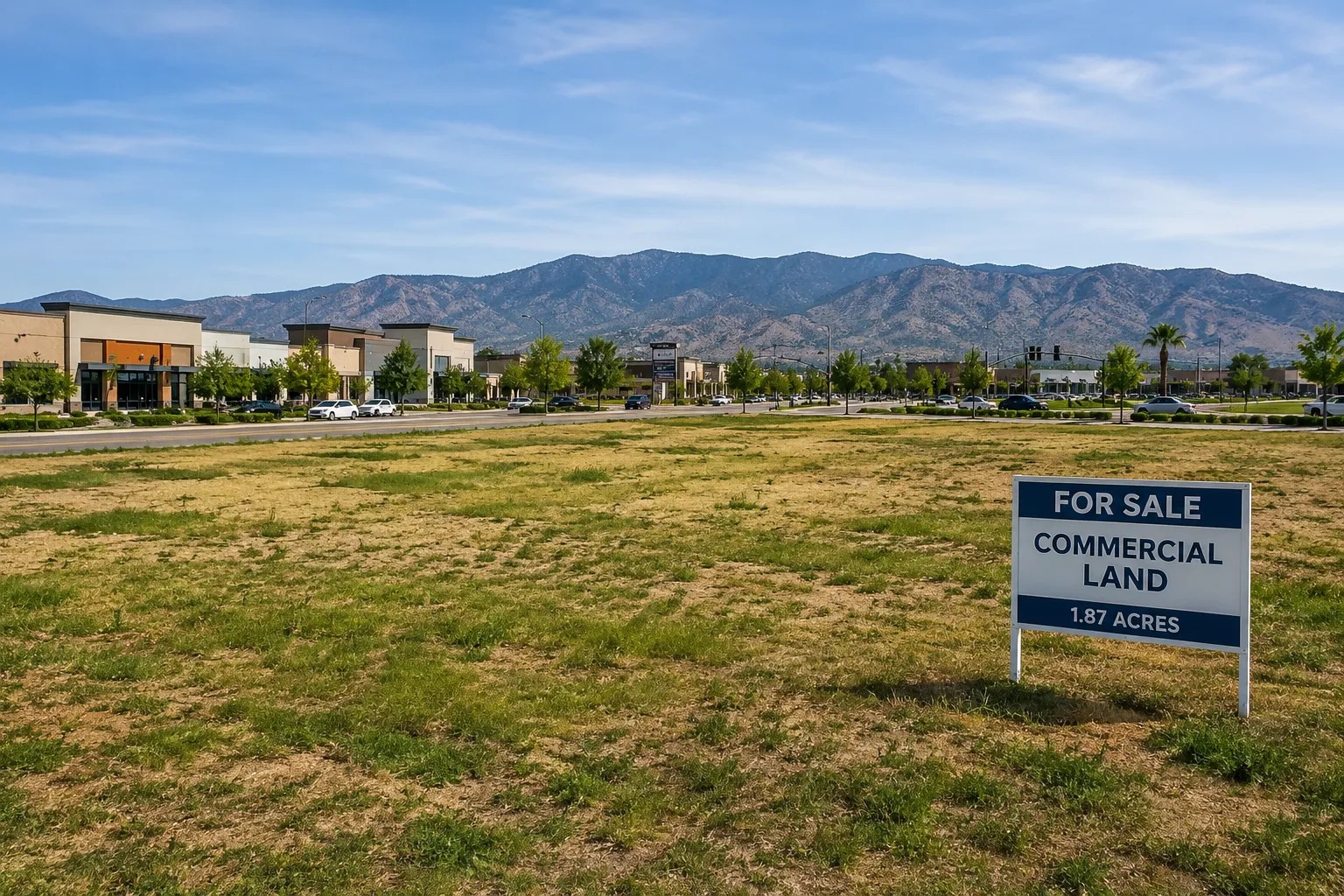
Commercial and industrial land is appraised using recognized valuation methods together with detailed analysis of the property's location, zoning, permitted uses, physical characteristics, infrastructure, entitlement status, development potential, and highest and best use.
The appraisal process typically includes a property inspection, review of zoning and public records, analysis of property rights and development restrictions, research into comparable land sales, and evaluation of current market data. For industrial land, additional attention may be given to transportation access, truck circulation, utility capacity, infrastructure, surrounding industrial development, and characteristics affecting warehouse, distribution, logistics, or manufacturing use.
After completing the necessary property and market research, the appraiser determines which valuation approaches are appropriate based on the assignment, property characteristics, intended use, and available market evidence.
Sales Comparison Approach
The Sales Comparison Approach is frequently the primary method used to value commercial and industrial land. Recent sales of comparable development sites are researched and analyzed to determine how buyers and investors are pricing competing properties.
Comparison factors may include:
- Location and surrounding market
- Commercial or industrial zoning
- Permitted uses
- Parcel size and configuration
- Development intensity
- Entitlement status
- Access and street frontage
- Freeway and transportation access
- Utilities and infrastructure
- Topography and site conditions
- Timing and conditions of sale
Comparable sales are evaluated based on the characteristics that influence actual buyer and developer decisions rather than relying solely on price per acre or price per square foot.
Income Capitalization Approach
The Income Capitalization Approach may be applicable when commercial or industrial land produces income or when market participants commonly evaluate similar properties based on their income-producing potential. Examples may include ground-leased land and certain investment properties with established contractual income.
The analysis may consider:
- Existing ground lease income
- Market ground rents
- Lease terms and escalations
- Remaining lease term
- Expense responsibilities
- Income stability
- Market-supported capitalization rates
- Investor return expectations
The applicability of the Income Capitalization Approach depends on the property, assignment, and availability of reliable market evidence.
Other Land Valuation Techniques
Certain commercial and industrial land assignments may require additional valuation techniques when directly comparable land sales are limited, or development potential significantly influences how market participants evaluate the property.
Depending on the assignment and available market data, the appraiser may consider allocation, extraction, development-related analysis, or other recognized land valuation techniques. The methodology selected reflects the characteristics of the property and the actions of buyers, sellers, developers, and investors within the relevant market.
.
Reconciling the Value Indicators
Not every valuation approach carries the same weight in every commercial or industrial land appraisal. The appraiser evaluates the quality and relevance of the available market evidence before developing the final opinion of value.
For example, an entitled warehouse development site may require careful comparison with other industrial land sales having similar development rights, while an unentitled commercial parcel may require greater consideration of zoning, access, approval risk, infrastructure, and development timing.
The final reconciliation reflects the property's specific characteristics, commercial or industrial development potential, highest and best use, and the market evidence considered most reliable for the assignment.
Why Commercial & Industrial Land Appraisal Experience Matters
Commercial and industrial land valuation requires more than comparing acreage or applying an average price per square foot. Two parcels within the same market can have substantially different values because of zoning, permitted uses, infrastructure, utility capacity, transportation access, entitlement status, development rights, physical constraints, and highest and best use. Experienced appraisal analysis is essential for determining how these characteristics influence market value.
Experienced commercial and industrial land appraisal services provide property owners, developers, investors, lenders, attorneys, accountants, estate professionals, corporations, and government agencies with reliable valuation information for important development, financial, legal, tax, ownership, and investment decisions.
Who Requests Commercial & Industrial Land Appraisals?
Commercial and industrial land appraisals are requested by property owners, developers, investors, lenders, attorneys, accountants, corporations, estate professionals, trustees, and government agencies that require an independent and well-supported opinion of land value for acquisition, development, financing, legal, tax, or investment purposes.
-
Commercial & Industrial Property Owners
Landowners and developers may require appraisals when purchasing, selling, financing, holding, assembling, entitling, or preparing commercial land for future development. Independent valuation can also support decisions involving redevelopment, ownership restructuring, and alternative uses for underutilized sites.
-
Developers & Real Estate Investors
Developers and investors use commercial and industrial land appraisals to evaluate acquisitions, dispositions, warehouse and distribution development, manufacturing sites, business parks, redevelopment opportunities, land assemblages, and properties held for future development.
-
Banks and Commercial Lenders
Banks, credit unions, private lenders, and other financial institutions may require commercial and industrial land appraisals when underwriting acquisitions, evaluating collateral, refinancing existing debt, or financing proposed commercial or industrial development.
-
Attorneys & Law Firms
Attorneys may request commercial and industrial land appraisals for eminent domain, condemnation, partnership disputes, ownership disagreements, bankruptcy, business dissolution, damages, and other legal matters requiring an independent real estate valuation.
-
CPAs, Trustees & Estate Professionals
Certified Public Accountants, trustees, executors, and estate planning professionals may require commercial and industrial land appraisals for date-of-death valuations, estate tax reporting, probate, trust administration, gifting, ownership transfers, financial reporting, and other estate or tax-related purposes.
-
Government Agencies & Public Entities
Government agencies, municipalities, public entities, and other organizations may require commercial and industrial land valuations for eminent domain, condemnation, public acquisition, infrastructure projects, property tax matters, redevelopment, land exchanges, and other public purposes.
Whether the property is a retail development parcel, office site, warehouse or distribution site, manufacturing property, entitled industrial site, redevelopment opportunity, assemblage, or land held for future development, every appraisal is developed around the property's characteristics, intended use, intended users, effective valuation date, highest and best use, and relevant market conditions.
Why Choose Collins & Associates
Collins & Associates provides independent commercial and industrial land appraisal services personally completed by David R. Collins, Certified General Appraiser, with more than 50 years of real estate valuation experience throughout Southern California.

Meet Your Commercial Land Appraiser
David R. Collins, G.A.A., S.C.R.E.A.
Certified General Appraiser
Trusted by Property Owners, Developers, Attorneys & Lenders
Collins & Associates works directly with individuals and organizations requiring independent commercial and industrial land appraisal services, including:
- Commercial and industrial property owners
- Real estate developers
- Commercial real estate investors
- Banks and lending institutions
- Attorneys and law firms
- Certified Public Accountants
- Trustees and estate professionals
- Corporations and asset managers
- Government agencies and public entities
Every client works directly with Dave throughout the appraisal process, from the initial consultation and property research through completion of the final appraisal report.
Certified General Appraiser for Commercial & Industrial Land
David R. Collins holds the Certified General Appraiser credential and personally completes every commercial and industrial land appraisal assignment, including properties involving complex zoning, development, entitlement, infrastructure, or highest and best use considerations.
Commercial and industrial land appraisal assignments may include:
- Retail and office development sites
- Warehouse development land
- Distribution and logistics sites
- Manufacturing land
- Flex and business park sites
- Entitled and unentitled industrial land
- Infill and redevelopment properties
- Commercial and industrial land assemblages
Commercial & Industrial Land Valuation Experience
Commercial and industrial land appraisal requires careful analysis of the characteristics that drive development utility and market demand.
Zoning regulations, permitted uses, parcel configuration, transportation access, truck circulation, utility capacity, infrastructure, entitlements, development restrictions, surrounding land uses, and highest and best use may all influence property value.
Collins & Associates combines property-specific analysis with relevant commercial and industrial land sales, current market data, and recognized valuation methods to determine how developers, investors, owner-users, and other market participants are likely to evaluate the property.
Complex Commercial & Industrial Land Valuation
Commercial and industrial land frequently becomes the subject of assignments where development rights, entitlement status, ownership interests, public acquisition, or retrospective value require more detailed valuation analysis.
Assignments may include:
- Commercial financing and refinancing
- Eminent domain and condemnation
- Property tax assessment appeals
- Estate, trust, and probate matters
- Partnership and ownership disputes
- Commercial and industrial land assemblages
- Retrospective valuations
- Development and redevelopment sites
- Litigation and dispute resolution
Independent Commercial & Industrial Land Valuation
Collins & Associates maintains an independent and objective perspective throughout every appraisal. The appraiser's responsibility is to develop a credible opinion of value supported by recognized appraisal methodology, relevant market evidence, highest and best use analysis, and professional judgment.
Every commercial and industrial land appraisal is developed in accordance with USPAP and applicable appraisal standards and tailored to the property's characteristics, property rights, intended use, intended users, effective valuation date, and assignment requirements.
Counties Served
Collins & Associates provides independent commercial and industrial land appraisal services throughout Southern California for retail, office, warehouse, distribution, logistics, manufacturing, flex, business park, and other development land. Every appraisal is personally completed by David R. Collins, Certified General Appraiser, and developed in accordance with USPAP and applicable appraisal standards.
-
Los Angeles County
-
Orange County
-
Riverside County
-
San Bernardino County
-
San Diego County
-
Ventura County
Commercial and industrial land appraisal assignments may include retail and office development sites, warehouse and distribution land, manufacturing sites, logistics properties, flex and business park land, entitled and unentitled parcels, infill properties, redevelopment sites, land assemblages, and larger development parcels throughout Southern California.
Every appraisal is tailored to the property's zoning regulations, permitted uses, parcel characteristics, transportation access, utilities and infrastructure, entitlement status, development rights, highest and best use, intended use, intended users, effective valuation date, and applicable market conditions.
Request a Commercial & Industrial Land Appraisal in California
Whether you are purchasing or selling land, evaluating a commercial or industrial development opportunity, securing financing, planning an estate, appealing a property tax assessment, or addressing a legal matter, an independent appraisal provides objective market evidence for informed real estate decisions.
Collins & Associates provides commercial and industrial land appraisal services throughout Southern California. Every assignment is personally completed by David R. Collins, Certified General Appraiser, with careful consideration of zoning, permitted uses, transportation access, utilities, infrastructure, site characteristics, entitlements, development potential, comparable land sales, market data, and highest and best use.
From retail and office development sites to warehouse, distribution, logistics, manufacturing, flex, and business park land, Collins & Associates delivers credible, USPAP-compliant appraisal reports for property owners, developers, investors, lenders, attorneys, accountants, corporations, estate professionals, and government agencies.
Contact Dave today to discuss your commercial or industrial land appraisal needs and determine the appropriate scope of work for your property and intended use.

Frequently Asked Questions About Commercial & Industrial Land Appraisals
Schedule a Call Back with Dave Collins
Provide your contact information, and Dave Collins will personally return your call to discuss your commercial or industrial land appraisal needs, property details, intended use, and anticipated timeline.
Dave is a Certified General Appraiser with more than 50 years of real estate valuation experience across Southern California. Every assignment is completed personally, providing direct access to the appraiser from the initial consultation through completion of the final appraisal report.
During the call, Dave will review:
- The commercial or industrial land parcel and its location
- Zoning, permitted uses, and development potential
- Transportation access, utilities, and infrastructure
- The intended use and intended users of the appraisal
- The effective valuation date
- The appropriate appraisal scope and report type
- Available surveys, site plans, entitlements, and other property documentation
- Property access and relevant physical characteristics
- Your preferred completion timeline
Types of Properties Commonly Appraised
- Commercial development land
- Industrial development land
- Retail and office development sites
- Warehouse development land
- Distribution and logistics sites
- Manufacturing land
- Flex and business park sites
- Entitled and unentitled land
- Infill and redevelopment sites
- Commercial and industrial land assemblages
Direct Access to the Appraiser
All consultations and commercial and industrial land appraisal assignments are handled directly by David R. Collins, ensuring every valuation benefits from more than 50 years of real estate appraisal and land valuation experience throughout Southern California.
"*" indicates required fields