
Trusted Shopping Center Appraisals for Significant Commercial Real Estate Investments
Shopping centers represent some of the most valuable and complex retail investment properties in California. Their market value depends on numerous factors, including anchor tenants, occupancy, lease agreements, rental income, operating expenses, trade area demographics, customer traffic, and overall investment performance. An independent shopping center appraisal provides the objective market value needed to support financing, acquisitions, legal proceedings, estate planning, tax appeals, and strategic investment decisions.
Collins & Associates provides shopping center appraisals throughout Southern California for lenders, institutional investors, developers, attorneys, accountants, property owners, REITs, corporations, and government agencies. Every appraisal is personally completed by David R. Collins, Certified General Appraiser, and developed in accordance with the Uniform Standards of Professional Appraisal Practice (USPAP).
Because shopping centers often involve multiple buildings, numerous tenants, complex lease structures, reciprocal easement agreements, and long-term investment considerations, each appraisal includes a detailed analysis of the property's physical characteristics, income-producing capability, market position, and competitive environment to develop a well-supported opinion of market value.
What Is a Shopping Center Appraisal?
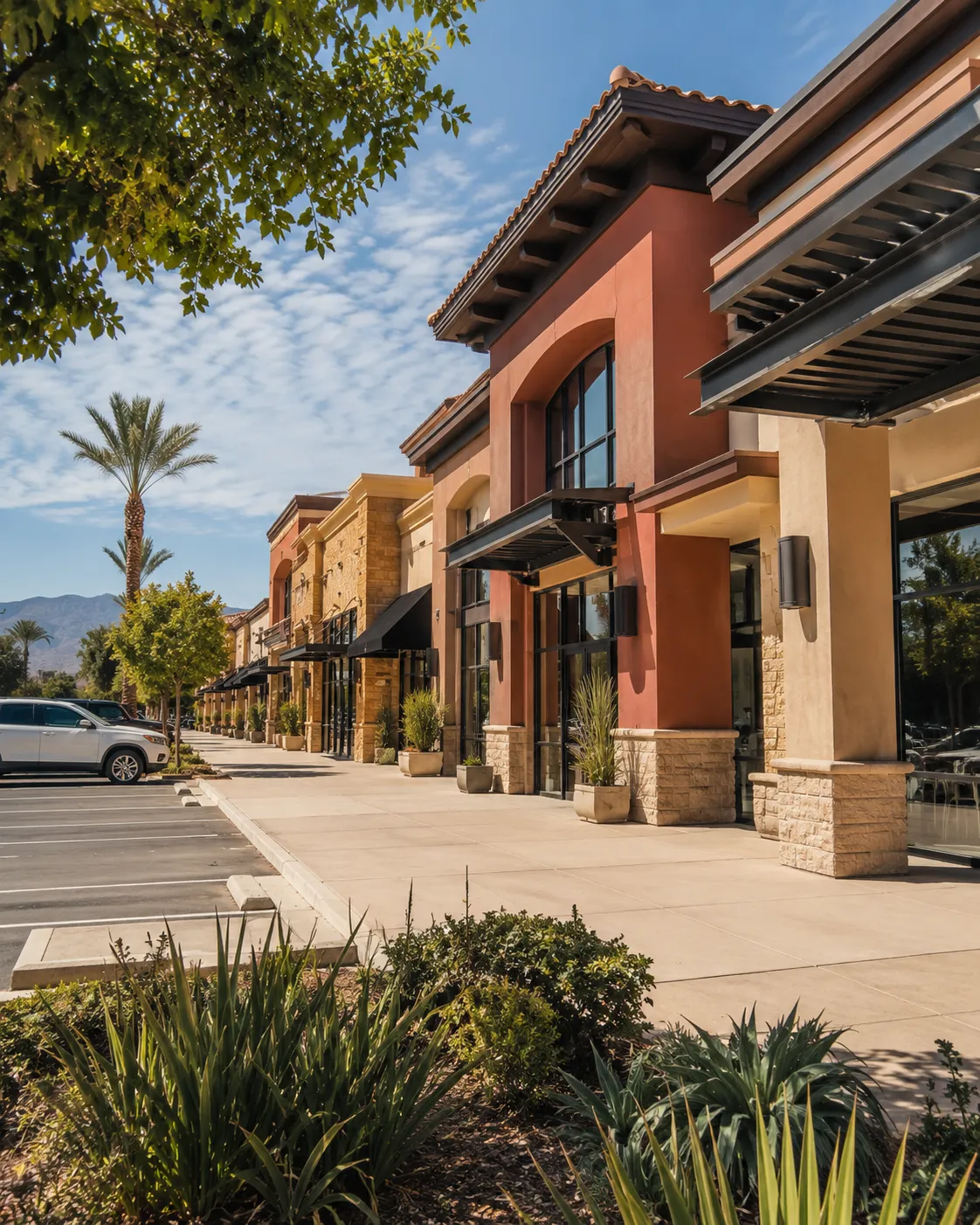
A shopping center appraisal is the process of developing an independent opinion of a shopping center's market value by analyzing its physical improvements, land, tenant composition, lease agreements, rental income, occupancy, operating expenses, market conditions, and comparable investment properties. The appraisal considers how investors evaluate retail assets while accounting for the property's unique characteristics and long-term income potential.
Shopping centers typically consist of multiple retail buildings or interconnected commercial spaces occupied by a combination of national retailers, regional businesses, restaurants, entertainment venues, grocery stores, medical users, and service-oriented tenants. Because these properties generate income from numerous lease agreements, the appraisal requires a comprehensive evaluation of both the real estate itself and the investment characteristics that influence value.
The valuation process may include an analysis of comparable shopping center sales, market rental rates, lease structures, tenant quality, occupancy history, operating expenses, capitalization rates, customer traffic, visibility, parking capacity, zoning, and the property's highest and best use. The scope of work is tailored to the intended use of the appraisal and the specific requirements of the client.
The completed appraisal provides a credible and impartial opinion of value for lenders, investors, attorneys, accountants, courts, property owners, estate professionals, government agencies, county assessor offices, and the Internal Revenue Service for financing, tax matters, litigation, estate planning, financial reporting, and other commercial real estate decisions.
What the Appraiser Evaluates
- Community shopping centers
- Regional shopping centers
- Super-regional shopping centers
- Grocery-anchored shopping centers
- Power centers
- Lifestyle shopping centers
- Mixed-use shopping centers
- Open-air shopping centers
- Enclosed shopping malls
- Multi-building retail developments
- Retail investment portfolios
- Institutional retail assets
- Retail condominium developments
- Redevelopment shopping centers
- Value-add shopping center investments
- Owner-occupied shopping centers
- Entertainment-oriented retail centers
- Large mixed-tenant commercial centers
Each shopping center presents unique valuation challenges based on its tenant mix, anchor tenants, lease structures, occupancy levels, operating performance, trade area, market competition, and long-term investment characteristics, making specialized commercial appraisal experience essential for developing a reliable opinion of market value.
Types of Shopping Centers We Appraise
Shopping centers range from neighborhood-focused retail developments to large regional destinations that serve broad consumer markets. Collins & Associates provides independent shopping center appraisals for lenders, institutional investors, developers, attorneys, accountants, REITs, corporations, property owners, and government agencies throughout Southern California.
Community Shopping Centers
Community shopping centers typically serve multiple neighborhoods and offer a wider selection of retailers than smaller neighborhood centers. These properties often include grocery stores, pharmacies, restaurants, fitness centers, medical providers, financial institutions, and national retail chains that generate consistent customer traffic.
- Trade area demographics
- Tenant mix and occupancy
- Anchor tenant strength
- Lease structures
- Rental income stability
- Visibility and accessibility
- Parking capacity
- Comparable community shopping center sales
Regional Shopping Centers
Regional shopping centers attract consumers from a much larger geographic area and generally feature multiple anchor tenants, national retailers, restaurants, entertainment venues, and specialty stores. These larger investment properties require extensive analysis of market position, consumer demand, and long-term investment performance.
Grocery-Anchored Shopping Centers
Grocery-anchored shopping centers are typically centered around a major supermarket that generates consistent customer visits and supports surrounding inline retailers. Because the anchor tenant significantly influences occupancy and leasing activity, these properties require careful evaluation of both tenant stability and long-term market demand.
Power Centers
Power centers are large retail developments anchored by major national retailers, warehouse clubs, home improvement stores, sporting goods retailers, and other destination businesses. These properties often involve long-term leases, national credit tenants, and substantial land improvements that influence overall value.
Lifestyle Centers
Lifestyle centers combine retail shopping with restaurants, entertainment, outdoor gathering spaces, and pedestrian-oriented environments. These properties often emphasize customer experience while attracting higher-end retailers and restaurants.
Mixed-Use Shopping Centers
Mixed-use shopping centers combine retail space with office, residential, hospitality, or other commercial uses within a single development. Because multiple property types contribute to overall value, these assignments require analysis of each component individually as well as the property's combined investment performance.
Redevelopment & Value-Add Shopping Centers
Older shopping centers may offer opportunities for repositioning through renovations, redevelopment, tenant replacement, adaptive reuse, or expansion. These assignments require careful analysis of both current market value and future investment potential.
Shopping Center Characteristics That Influence Valuation
Shopping centers are influenced by a wide range of physical, financial, and market factors that affect both current performance and long-term investment value. A comprehensive shopping center appraisal analyzes how these characteristics impact marketability, income potential, investment risk, and overall market value in today's commercial real estate environment.
Anchor Tenants and Tenant Quality
Anchor tenants often serve as the primary traffic generators for a shopping center and play a significant role in overall property performance. National retailers, grocery stores, department stores, entertainment venues, and other major tenants can influence occupancy, leasing activity, customer traffic, and investor demand.
Net Operating Income and Investment Performance
Net Operating Income (NOI) is one of the primary measures investors use when evaluating shopping center investments. Rental income, operating expenses, vacancy allowances, management costs, Common Area Maintenance (CAM) expenses, and capital reserves are carefully analyzed to determine the property's financial performance.
Visibility, Access, and Traffic Counts
Successful shopping centers are typically located along highly traveled corridors with convenient access, excellent visibility, and efficient traffic circulation. Signalized intersections, multiple access points, street frontage, and customer convenience often contribute to stronger leasing demand and higher property values.
Building Condition and Capital Improvements
The age and condition of the buildings, roofing systems, mechanical equipment, façades, sidewalks, lighting, landscaping, and parking areas all influence marketability. Well-maintained shopping centers generally require fewer capital expenditures and are more attractive to both tenants and investors.
Retail Market Conditions
Investor demand, capitalization rates, interest rates, retail vacancy trends, consumer confidence, new retail construction, and regional economic conditions all influence shopping center values. Understanding current market conditions is essential when developing a credible opinion of value for these complex investment properties.
Tenant Mix and Occupancy
A diversified tenant mix helps create a balanced retail environment while reducing reliance on any single business or industry. Occupancy levels, tenant retention, lease rollover schedules, and the compatibility of neighboring businesses all contribute to the shopping center's long-term stability and value.
Trade Area and Consumer Demographics
The strength of the surrounding trade area directly affects tenant demand and long-term investment performance. Population growth, household income, employment levels, consumer spending habits, and competing retail developments all influence how successfully a shopping center serves its market.
Parking Capacity and Site Design
Adequate parking is essential for retailers, restaurants, and entertainment uses. Shopping center appraisals evaluate parking ratios, traffic circulation, pedestrian access, loading areas, landscaping, and the overall functionality of the site to determine how well the property supports tenant operations and customer experience.
Zoning, Easements, and Development Potential
Shopping centers often include reciprocal easement agreements, shared access rights, signage easements, and other legal considerations that affect ownership and operation. Zoning regulations, land use restrictions, and redevelopment opportunities may also influence current and future market value.
When Is a Shopping Center Appraisal Needed?
Shopping center appraisals support a wide variety of financial, legal, tax, and investment decisions. Because these properties often represent significant commercial real estate assets, independent appraisals provide objective market evidence for owners, lenders, investors, attorneys, accountants, and government agencies.
How Shopping Centers Are Appraised

Shopping center appraisals require a comprehensive analysis of both the real estate and the investment characteristics that influence value. Because these properties often consist of multiple buildings, numerous tenants, varying lease structures, and significant income streams, the valuation process extends well beyond a simple comparison of recent sales. Each assignment evaluates the property's physical improvements, operating performance, tenant composition, market position, and competitive environment to develop a credible opinion of market value.
Following a thorough property inspection and detailed market research, the appraiser determines which valuation methodologies are most appropriate for the assignment. Depending on the shopping center's characteristics and intended use, the appraisal may rely on the Sales Comparison Approach, Income Capitalization Approach, Cost Approach, or a combination of these recognized methods. The final opinion of value is based on the quality of available market evidence and the property's specific investment attributes.
Sales Comparison Approach
The Sales Comparison Approach estimates value by analyzing recent sales of comparable shopping centers within the same or competing retail markets. Comparable properties are evaluated based on location, tenant composition, anchor tenants, occupancy, building size, physical condition, site improvements, lease structures, and other investment characteristics before adjustments are made for meaningful differences.
The analysis may consider:
- Comparable shopping center sales
- Trade area characteristics
- Anchor tenant strength
- Tenant mix and occupancy
- Lease structures
- Building size and site improvements
- Parking capacity
- Visibility and accessibility
- Market rental trends
- Timing of comparable sales
This approach reflects how buyers and investors are currently valuing similar shopping center investments within the marketplace.
Income Capitalization Approach
Because shopping centers are purchased primarily for their income-producing potential, the Income Capitalization Approach is often the most significant valuation method. This approach estimates value by analyzing the property's ability to generate stable income while considering market risks and investor expectations.
The analysis may consider:
- Current rental income
- Market rental rates
- Occupancy and stabilized vacancy
- Lease expiration schedules
- Anchor tenant leases
- Operating expenses
- Common Area Maintenance (CAM) reimbursements
- Net Operating Income (NOI)
- Capitalization rates
- Investor return expectations
The anticipated income stream is converted into an indication of value using market-supported capitalization data and current investment market conditions.
Cost Approach
The Cost Approach estimates value by combining the market value of the underlying land with the current cost to replace or reproduce the improvements, less depreciation from physical deterioration, functional obsolescence, and external factors. Although this approach generally receives less emphasis for mature income-producing shopping centers, it may provide valuable support for newer developments or specialized assignments where comparable market data is limited
Reconciling the Value Indicators
Each valuation approach provides a different perspective on value, and not every method carries the same weight in every assignment. The appraiser evaluates the quality of the available market evidence and determines which approaches provide the most reliable indication of market value.
For example, a stabilized regional shopping center with long-term national tenants may rely primarily on the Income Capitalization Approach, while a recently developed shopping center with limited operating history may require greater consideration of the Sales Comparison and Cost Approaches. Every appraisal is tailored to the property's characteristics, intended use, scope of work, and available market evidence to produce a well-supported opinion of market value.
Why Shopping Center Appraisal Experience Matters
Shopping center appraisals require specialized knowledge of large-scale retail investments, institutional ownership, lease structures, anchor tenant relationships, market rents, capitalization rates, operating performance, and regional retail trends. Developing a credible valuation requires understanding both the physical real estate and the investment dynamics that influence buyer and lender decisions.
Experienced shopping center appraisal services provide lenders, institutional investors, property owners, attorneys, accountants, developers, REITs, corporations, and government agencies with reliable valuation support for financing, acquisitions, estate planning, tax appeals, litigation, financial reporting, and long-term commercial real estate investment decisions.
Who Requests Shopping Center Appraisals?
Shopping center appraisals are requested by institutional investors, property owners, developers, lenders, attorneys, accountants, REITs, corporations, estate professionals, and government agencies that require an independent and well-supported opinion of market value for significant commercial real estate assets.
-
Shopping Center Owners & Developers
Owners and developers obtain shopping center appraisals when purchasing, selling, refinancing, expanding, redeveloping, restructuring ownership, securing financing, or evaluating long-term investment strategies. Independent valuations provide objective market support for both day-to-day business decisions and major capital transactions.
-
Institutional & Private Investors
Institutional investors, private equity groups, REITs, family offices, and private investors use shopping center appraisals to evaluate acquisitions, dispositions, financing opportunities, portfolio performance, redevelopment projects, and long-term investment risk across retail real estate holdings.
-
Banks and Commercial Lenders
Commercial banks, life insurance companies, CMBS lenders, credit unions, and private lending institutions commonly require shopping center appraisals when underwriting acquisitions, refinancing existing debt, evaluating collateral, or supporting commercial lending decisions.
-
Attorneys & Law Firms
Attorneys rely on shopping center appraisals in matters involving eminent domain, partnership disputes, business dissolution, bankruptcy, divorce proceedings, lease disputes, ownership litigation, condemnation actions, and other legal proceedings involving commercial real estate.
-
CPAs, Trustees & Estate Professionals
Certified Public Accountants, trustees, executors, and estate planning professionals request shopping center appraisals for financial reporting, probate administration, trust management, ownership transfers, gifting, IRS reporting, estate settlements, and other assignments requiring an independent valuation.
-
Asset Managers, REITs & Government Agencies
Commercial real estate brokers, asset managers, corporations, REITs, and government agencies may obtain office building appraisals for acquisitions, dispositions, lease negotiations, portfolio analysis, internal planning, public acquisition, regulatory review, or asset management.
Whether the shopping center is institutionally owned, privately held, fully leased, partially occupied, undergoing redevelopment, or part of a larger investment portfolio, every appraisal is developed around the intended use, intended users, effective valuation date, market conditions, and reporting requirements to produce a credible and well-supported opinion of market value.
Why Choose Collins & Associates
Collins & Associates provides independent shopping center appraisals throughout Southern California, personally completed by David R. Collins, Certified General Appraiser. With more than five decades of commercial real estate valuation experience, clients receive objective analysis supported by thorough market research and recognized appraisal methodology.

Meet Your Office Property Appraiser
David R. Collins, G.A.A., S.C.R.E.A.
Certified General Appraiser
Trusted by Lenders, Attorneys, Investors, and Property Owners
Collins & Associates works directly with professionals and organizations that require independent shopping center appraisals, including:
- Commercial banks and lending institutions
- Institutional investors and REITs
- Commercial real estate developers
- Attorneys and law firms
- Certified Public Accountants
- Commercial property owners
- Asset managers
- Government agencies
Every client works directly with Dave throughout the appraisal process, from the initial consultation through delivery of the completed appraisal report.
Certified General Appraiser for Shopping Centers
David R. Collins is a Certified General Appraiser qualified to appraise virtually every type of shopping center, from community retail developments to large regional retail investments throughout Southern California.
Shopping center appraisal assignments include:
- Community shopping centers
- Regional shopping centers
- Super-regional shopping centers
- Grocery-anchored shopping centers
- Power centers
- Lifestyle centers
- Mixed-use shopping centers
- Institutional retail investments
Specialized Shopping Center Valuation Experience
Shopping center valuation requires an understanding of large-scale retail investments, anchor tenant relationships, lease structures, market rents, capitalization rates, reciprocal easement agreements, operating performance, and regional retail market trends.
Collins & Associates combines detailed property analysis with verified comparable sales, lease data, demographic research, and current investment market information to develop appraisal reports that reflect today's retail real estate environment.
Experience with Complex Retail Valuation Assignments
Shopping center appraisals are frequently required for sophisticated financial transactions and legal matters where credible valuation analysis is essential.
Assignments may include:
- Commercial financing and refinancing
- Institutional acquisitions and dispositions
- Property tax assessment appeals
- Partnership and shareholder disputes
- Estate and trust administration
- Bankruptcy proceedings
- Eminent domain
- Retrospective valuation assignments
Independent, USPAP-Compliant Valuation Reports
Collins & Associates provides independent shopping center appraisal services throughout Southern California, serving many of the region's most active retail investment markets. Every appraisal is personally completed by David R. Collins, Certified General Appraiser, and developed in accordance with USPAP standards.
Counties Served
Collins & Associates provides independent office building appraisal services throughout Southern California, including the region’s major business districts, professional office markets, suburban employment centers, and commercial investment areas.
-
Los Angeles County
-
Orange County
-
Riverside County
-
San Bernardino County
-
San Diego County
-
Ventura County
Our shopping center appraisal assignments include community shopping centers, regional shopping centers, grocery-anchored developments, power centers, lifestyle centers, mixed-use retail developments, institutional retail assets, and large multi-tenant shopping centers throughout Southern California.
Every appraisal is tailored to the property's tenant mix, anchor tenants, lease structure, operating performance, intended use, intended users, effective valuation date, market conditions, and reporting requirements to deliver a credible and well-supported opinion of market value.
Request a Shopping Center Appraisal in California
Whether you're acquiring a shopping center, refinancing an existing investment, appealing a property tax assessment, supporting litigation, planning an estate, or evaluating a major retail asset, an independent shopping center appraisal provides the objective market value needed to make informed business and investment decisions.
Collins & Associates provides shopping center appraisals throughout Southern California. Every assignment is personally completed by David R. Collins, Certified General Appraiser, and developed around the property's physical characteristics, tenant composition, lease structure, operating performance, intended use, intended users, and reporting requirements.
From community shopping centers and grocery-anchored developments to regional shopping centers, power centers, lifestyle centers, and mixed-use retail projects, we deliver credible, USPAP-compliant appraisal reports trusted by lenders, institutional investors, attorneys, accountants, developers, REITs, corporations, and government agencies.
Contact Dave today to discuss your shopping center appraisal needs and determine the appropriate scope of work for your assignment.

Frequently Asked Questions About Shopping Center Appraisals
Schedule a Call Back with Dave Collins
Provide your contact information, and Dave Collins will personally return your call to discuss your shopping center appraisal needs, property details, intended use, and anticipated timeline.
Dave is a Certified General Appraiser with more than 50 years of real estate valuation experience across Southern California. Every assignment is completed personally, providing direct access to the appraiser from the initial consultation through completion of the final report.
During the call, Dave will review:
- The shopping center, its tenant mix, and surrounding trade area
- Anchor tenants, occupancy, lease structure, and whether the property is owner-occupied or held as an investment
- The intended use and intended users of the appraisal
- The effective valuation date
- The appropriate appraisal scope and report type
- Rent rolls, lease agreements, operating statements, and available financial information
- Property access and available documentation
- Your preferred completion timeline
Types of Properties Commonly Appraised
- Community shopping centers
- Regional shopping centers
- Super-regional shopping centers
- Grocery-anchored shopping centers
- Power centers
- Lifestyle centers
- Mixed-use shopping centers
- Institutional retail investment properties
Direct Access to the Appraiser
All consultations and shopping center appraisal assignments are handled directly by David R. Collins, ensuring every valuation benefits from more than 50 years of commercial real estate appraisal experience throughout Southern California.
"*" indicates required fields