
Appraisals for Multi-Unit Residential Properties
Multi-family residential properties represent an important segment of the real estate market because they function both as housing and as income-producing investments. Unlike single-family homes, these properties generate rental income and are often evaluated by investors based on their potential cash flow and long-term performance.
A multi-family residential appraisal provides an independent opinion of market value for properties containing multiple residential units. These valuations are commonly required for transactions, refinancing, estate planning, tax matters, and investment analysis. Because income performance and market demand both influence value, the appraisal process evaluates physical property characteristics and financial data on rental income and operating expenses.
Typical multi-family residential properties include duplexes, triplexes, fourplexes, and apartment buildings. These properties are widely owned by individual investors, partnerships, and family trusts throughout Southern California.
Collins & Associates performs valuation assignments for multi-unit residential properties throughout Southern California, supporting property owners, lenders, attorneys, and financial professionals who require reliable, well-documented appraisal analysis.
What Qualifies as a Multi-Family Residential Property
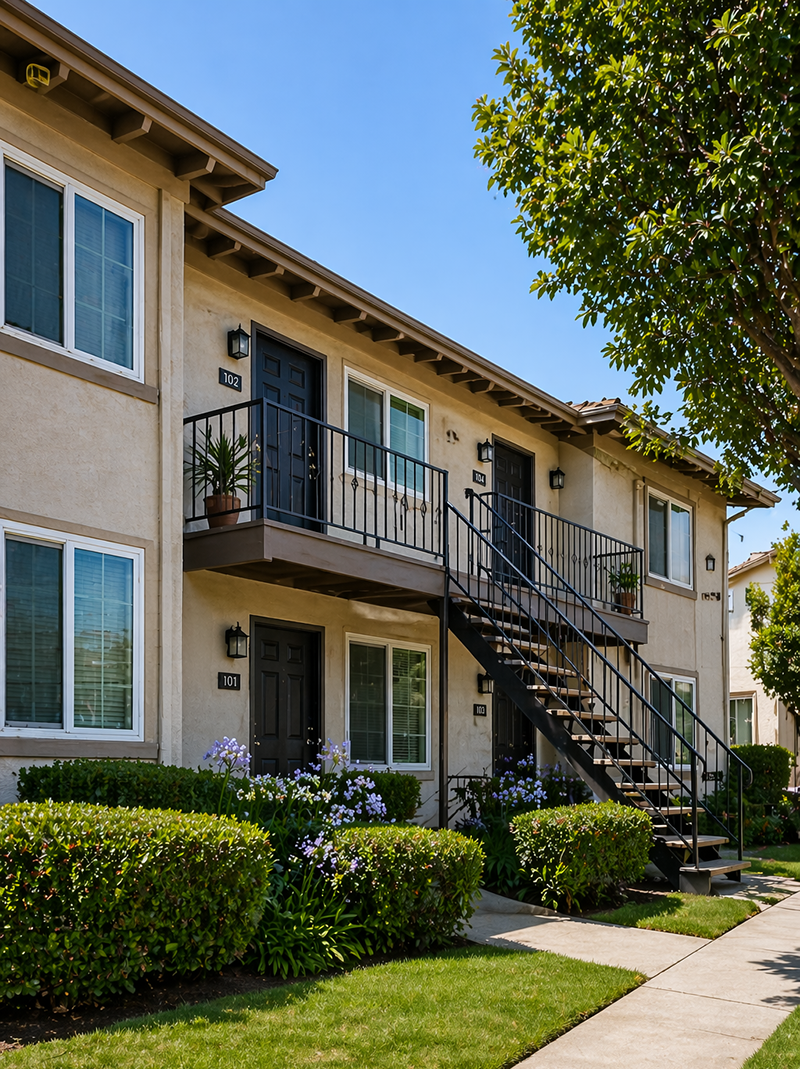
Multi-family residential properties contain two or more separate dwelling units within a single property. These units are designed to be occupied by separate households and typically generate rental income for the property owner.
Common examples include:
- Duplex properties – residential buildings containing two separate units
- Triplex properties – buildings with three residential units
- Fourplex properties – four individual rental units
- Apartment buildings – properties containing 5 or more rental units
- Multi-unit residential investment properties held for long-term income
Although these properties are residential, they often serve as income-producing real estate investments. As a result, valuation may involve analyzing both the property's physical attributes and its income-generating potential.
Ownership structures can vary widely. Individual investors own some multi-family properties, while others may be held within family trusts, partnerships, or investment groups. In these cases, an appraisal provides objective valuation data used for financial planning, tax reporting, or ownership restructuring.

Key Factors That Influence Multi-Family Property Value
Determining the value of a multi-family property requires careful analysis of several interconnected factors. Appraisers evaluate both the property's physical characteristics and the economic performance of the rental units.
By analyzing these factors together, appraisers develop a comprehensive understanding of how the subject property compares to similar multi-family assets in the market.
When Multi-Family Property Appraisals Are Needed
Multi-family residential appraisals are required in a range of financial, legal, and investment scenarios where an accurate and well-supported property valuation is essential.
Property Purchase or Sale
Buyers and sellers often request an appraisal to determine the market value of a multi-unit property before completing a transaction.
Refinancing
Lenders typically require an independent appraisal before approving financing for rental or income-producing properties.
Estate Planning
When multi-family real estate is part of an estate, valuation may be required for tax reporting and inheritance planning. These assignments may also support Date of Death Appraisals, which establish value as of a specific historical date.
Trust Administration
Trust administrators frequently need property valuations to properly document real estate assets held within a trust.
Property Tax Appeals
Owners may request an appraisal when disputing assessed values through the property tax assessment appeals process.
Partnership Dissolution
When ownership interests are being restructured or dissolved, a professional appraisal helps establish fair market value for all parties involved.
Divorce Proceedings
Courts may require an independent valuation of real estate assets during divorce proceedings.
Investment Analysis
Investors often request appraisal analysis when evaluating potential acquisitions or assessing the financial performance of rental property assets.
Valuation Methods Used for Multi-Family Properties
Appraising a multi-family residential property requires the use of recognized valuation methods based on the property’s characteristics and the purpose of the appraisal. In most cases, one or more approaches are applied to develop a well-supported opinion of market value.
Appraising a multi-family residential property requires the use of recognized valuation methods based on the property’s characteristics and the purpose of the appraisal. In most cases, one or more approaches are applied to develop a well-supported opinion of market value.
While these valuation methods provide a framework, multi-family properties often involve additional complexities that require deeper analysis.
Challenges in Appraising Multi-Unit Residential Properties
Valuing multi-family residential properties involves a range of variables that can significantly influence market value. Unlike single-family homes, income-producing properties require careful analysis of both physical characteristics and financial performance.
Variable Rental Income
Rental income can fluctuate based on tenant turnover, lease structures, and changes in local market demand. Appraisers must determine whether current rents reflect true market conditions.
Tenant Turnover
Frequent tenant turnover can impact occupancy levels and income stability. Local vacancy trends and leasing activity are important factors in valuation analysis.
Operating Expense Structures
Expenses can vary widely depending on property management, building age, and maintenance needs, directly affecting net income and value.
Unit Mix and Layout
Differences in unit size, layout, and configuration can influence rental rates and overall property performance.
Limited Comparable Sales
In some markets, comparable multi-family sales may be limited. When data is scarce, appraisers must rely on deeper market analysis and professional judgment.
These factors highlight why multi-family appraisal requires experienced analysis, particularly when income performance, market conditions, and investor expectations must be carefully evaluated to develop a credible opinion of value.
Additional Valuation Considerations for Multi-Family Residential Properties
Multi-family residential appraisal analysis often requires evaluating additional financial and market factors that influence how investors assess rental housing assets. These considerations help provide a more complete and market-supported opinion of value.
Gross Rental Income and Net Operating Income (NOI)
Income-producing residential properties are evaluated based on their ability to generate rental income. Appraisers analyze gross income, vacancy allowances, and operating expenses to estimate net operating income (NOI), a key indicator of property performance.
Capitalization Rates and Investor Expectations
Capitalization rates reflect how investors evaluate risk and return. Appraisers analyze rates from comparable multi-family sales to understand how similar properties are priced relative to income performance.
Unit Mix and Rental Configuration
The mix of unit types, such as studios, one-bedroom, and two-bedroom units, can influence rental demand, pricing, and overall property performance within the market.
Deferred Maintenance and Property Improvements
Property condition plays a critical role in valuation. Deferred maintenance or outdated systems may reduce value, while renovations and upgrades can improve income potential and market positioning.
Comparable Multi-Family Property Sales
Sales of similar duplexes, triplexes, fourplexes, and apartment buildings provide key market evidence. These comparable transactions help support valuation conclusions based on real market activity.
By analyzing income performance, property characteristics, and comparable market data, a multi-family appraisal provides a well-supported opinion of value grounded in recognized methodology and current market conditions.
Our Multi-Family Residential Appraisal Process
Each multi-family appraisal assignment follows a structured process designed to produce a clear, well-supported, and defensible opinion of value. While every property is unique, the steps below outline how Collins & Associates approaches valuation for income-producing residential properties.
1. Define the Assignment
The appraisal process begins by clearly defining the assignment parameters, including the subject property, intended use of the report, intended user, effective date of value, property rights being appraised, and scope of work.
For multi-family properties, this step is particularly important, as it establishes whether the analysis will focus on income potential, market positioning, or specific legal or financial requirements.
2. Inspect the Property
Typically the property is inspected to evaluate its physical condition, layout, improvements, and overall characteristics.
For multi-family residential properties, this may include reviewing:
- Unit configuration and mix
- Common areas and site layout
- Building condition and maintenance
- Observable factors that may influence rental performance
The level of inspection depends on the assignment type and scope of work.
Label
3. Research the Market
A comprehensive market analysis is conducted to evaluate conditions affecting multi-family residential properties.
This includes:
- Recent comparable sales
- Rental market trends
- Vacancy levels
- Local supply and demand
- Investor activity within the market
Understanding both sales and rental dynamics is critical when analyzing income-producing residential assets.
Label
4. Analyze Comparable Sales and Income Data
Relevant comparable multi-family property sales are selected and analyzed in relation to the subject property. Adjustments are made to account for differences in location, unit mix, condition, and income characteristics.
When applicable, income data is also evaluated, including:
- Rental income
- Operating expenses
- Vacancy allowances
- Market capitalization rates
This step helps align the property’s value with how investors evaluate similar income-producing assets.
Label
5. Reconcile the Data
All valuation approaches and supporting data are carefully reviewed and reconciled to develop a final opinion of market value.
The appraiser evaluates the quality and relevance of:
- Comparable sales
- Income analysis
- Market conditions
Professional judgment is applied to ensure the final value conclusion reflects the most reliable and supportable evidence available.
6. Report the Conclusion
The final step is the preparation of a professionally documented appraisal report.
The report includes:
- Scope of work and assignment conditions
- Market analysis and supporting data
- Valuation methodology and reasoning
- Final opinion of value
Reports are prepared in accordance with recognized appraisal standards and are suitable for use in lending, estate, tax, legal, and investment-related decisions.
This structured process ensures that each multi-family appraisal assignment is supported by market evidence, financial analysis, and professional experience, resulting in a clear and defensible opinion of value.
Multi-Family Property Appraisals Coverage Across Southern California & Beyond
Collins & Associates provides multi-family residential appraisal services throughout Southern California, including assignments in:
-
Los Angeles County
-
Orange County
-
Riverside County
-
San Bernardino County
-
San Diego County
Regional market familiarity is important when evaluating rental property values, as housing demand, rental rates, and investment trends can vary across the state.
Work With A Multi-Family Appraiser Who Understands Complex Assignments
Multi-family residential appraisal assignments are not all the same. A straightforward refinance is very different from a valuation involving income-producing property, estate planning, partnership interests, or legal matters.
In these situations, the appraisal must go beyond basic reporting. It must reflect how investors evaluate rental property, incorporate income analysis, and provide a clear, well-supported opinion of value aligned with the intended use.
At Collins & Associates, each multi-family appraisal is personally handled by David R. Collins, Certified General Appraiser (G.A.A., S.C.R.E.A.), bringing over 50 years of real estate valuation experience. His work is relied upon in assignments where accuracy, clarity, and defensibility are essential.

Meet Your Multi-Family Property Appraiser
David R. Collins, G.A.A., S.C.R.E.A.
Certified General Appraiser
David R. Collins is a Certified General Appraiser with decades of experience valuing residential and income-producing properties throughout Southern California. His background includes multi-family, commercial, and complex valuation assignments, allowing him to approach residential income properties with a deeper analytical perspective.
Multi-family properties require more than a surface-level review. They involve rental income analysis, market positioning, and investor-driven valuation considerations. This experience allows him to evaluate both the physical characteristics of a property and its financial performance within the market.
Many assignments involve legal, tax, or fiduciary considerations where the appraisal must withstand scrutiny from attorneys, accountants, courts, or government agencies. In these cases, experience is not optional. It directly affects how the valuation is developed, supported, and communicated.
Trusted for Assignments That Require More Than a Basic Valuation
Collins & Associates provides multi-family appraisal services for clients who require more than a simple estimate of value. Assignments may include:
- Estate and trust valuations
- Divorce and partnership-related appraisals
- IRS reporting and gifting
Retrospective or historical valuations - Income property analysis for acquisition or disposition
These assignments are developed with careful market research, income analysis, and reporting that aligns with the intended use of the appraisal.
Experience That Supports Defensible Multi-Family Valuations
Multi-family real estate often involves financial, legal, and investment considerations that require a deeper level of analysis than typical residential assignments.
An appraisal prepared for these purposes must not only be technically sound, but also clearly supported, well-documented, and understandable to all parties involved.
With decades of experience analyzing income-producing residential properties, Collins & Associates delivers appraisal reports designed to meet the expectations of investors, lenders, attorneys, and financial professionals alike.

Why Experience Matters in Multi-Family Appraisals
Multi-family residential properties combine elements of residential housing with characteristics commonly associated with income-producing real estate investments. As a result, valuation requires both market knowledge and financial analysis.
Collins & Associates brings more than 50 years of real estate valuation experience to assignments involving multi-unit residential properties throughout Southern California.
The firm regularly performs appraisal assignments for:
- Property owners and investors
- Lenders and financial institutions
- Attorneys and legal professionals
- CPAs and financial advisors
- Trust administrators and estate planners
Experience analyzing income-producing residential properties helps ensure that both property characteristics and rental performance are considered within the valuation process.
Each assignment is supported by market research, comparable data analysis, and professionally documented appraisal methodology.
Request a Multi-Family Property Appraisal
Multi-family residential properties often represent significant financial assets for investors, property owners, and family estates. When reliable valuation analysis is required, an independent appraisal can provide objective market data to support financial, legal, or investment decisions.
Collins & Associates provides professional appraisal services for multi-unit residential properties across Southern California, including duplexes, triplexes, fourplexes, and apartment buildings.
If you require a multi-family residential appraisal for lending, estate planning, tax reporting, or investment analysis, you may submit the Appraisal Request Form to begin the consultation process.
Initial discussions typically cover the property type, the purpose of the appraisal, the valuation date, and the scope of analysis.
If you’re unsure whether your situation requires an appraisal, we can review your property and intended use before moving forward.

Frequently Asked Questions
Schedule a Call Back with Dave Collins
Provide your contact information and Dave Collins will personally return your call to discuss your appraisal needs and timeline.
"*" indicates required fields