
Types of Real Estate Appraisals: A Complete Guide for Property Owners

Understanding the different types of real estate appraisals is critical when dealing with IRS reporting, legal matters, property taxes, or major financial decisions. Not all appraisals are created equal, and using the wrong type can lead to delays, compliance issues, or unnecessary financial risk.
Real estate appraisals vary based on purpose, property type, and reporting requirements. Whether you are handling estate planning, disputing a property tax assessment, or preparing for litigation, selecting the correct appraisal format ensures the valuation meets professional standards and is accepted by the intended party.
This guide breaks down the main types of appraisal reports, formats, and their real-world applications.
The Two USPAP-Defined Appraisal Report Types
Under the Uniform Standards of Professional Appraisal Practice (USPAP), there are two primary types of appraisal reports:
Appraisal Report
An Appraisal Report provides a comprehensive level of detail, including data, analysis, and conclusions that support the final opinion of value. This format is commonly used when transparency and full documentation are required.
Restricted Appraisal Report
A Restricted Appraisal Report is a more concise version, intended for a specific client who understands the property and valuation context. While shorter, it still meets professional standards and delivers a reliable opinion of value.
Common Appraisal Report Formats Explained
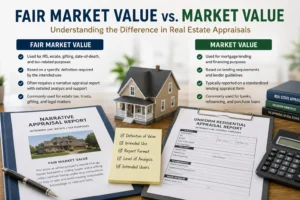
Standard Appraisal Forms (Residential)
Standard appraisal forms are commonly used for residential lending purposes, such as single-family homes and small income properties.
- Form-based with structured fields
- Focused on comparable sales
- Shorter in length
- Designed for lending efficiency
Narrative Appraisal Report (Commercial & Industrial)
Narrative appraisal reports are used for commercial and industrial properties, where valuation requires deeper analysis.
- Detailed market analysis
- Income and expense evaluation
- Lease structure review
- Zoning and land use analysis
- Highest and best use conclusions
These reports can range from 60 to 120+ pages, depending on the complexity of the assignment.
Restricted Narrative Appraisal Report
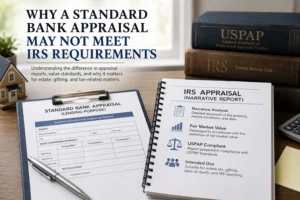
Restricted narrative reports are often used for IRS-related assignments, legal matters, and internal decision-making.
- Same valuation approaches as full narrative reports
- Condensed explanations and analysis
- Typically 20 to 30 pages
Despite being shorter, these reports remain fully compliant and reliable when used appropriately.
Appraisal Types Based on Purpose
In real-world scenarios, appraisals are often defined by why they are needed. Below are the most common appraisal types based on purpose:
Estate & Date of Death Appraisals
Used to determine property value for estate settlement, inheritance, and IRS reporting based on a retrospective valuation date.
Learn more about Date of Death Appraisals
IRS Estate Planning & Gifting Appraisals
Required when transferring property as part of wealth planning or gifting strategies to ensure IRS compliance.
Explore IRS Estate Planning Appraisals
Property Tax Appeal Appraisals
Used when property owners believe their assessed value exceeds market value and want to challenge property taxes.
View Property Tax Appeal Appraisals
Litigation & Expert Witness Appraisals
Prepared for legal disputes, including partnership disagreements, divorce cases, and eminent domain matters. These reports must be defensible in court.
See Expert Witness Appraisal Services
Financing & Asset Restructuring Appraisals
Requested by lenders or investors when evaluating loan approvals, refinancing, or restructuring real estate portfolios.
How to Choose the Right Type of Appraisal
Selecting the appropriate appraisal depends on several key factors:
- Purpose of the appraisal (IRS, legal, financing, tax appeal)
- Property type (residential, commercial, industrial)
- Required level of detail
- Intended user of the report
Choosing the wrong type can result in delays, rejected reports, or additional costs. Working with an experienced appraiser helps ensure the assignment is properly scoped from the beginning.
Need Help Determining the Right Appraisal?
If you’re unsure which type of appraisal is required, getting clarity early can save time and prevent costly mistakes.
- Ensure compliance with IRS and legal standards
- Receive accurate valuation based on the correct methodology
- Get a report tailored to its intended use






Need an Appraisal?
Contact Dave for reliable, certified appraisals across California.